Hoid is a worldhopper born on the planet Yolen before the Shattering of Adonalsium, and he is the one character who walks through nearly every Cosmere book. Stormlight readers know him as Wit, the King’s jester. This guide covers his names, powers, goals and every appearance. Spoilers for Wind and Truth follow.
Who is Hoid in the Cosmere?
Hoid is a pre-Shattering human from Yolen, the planet where humans first appeared and where the Shattering happened. He was present when the sixteen future Vessels killed Adonalsium and split it into Shards. Coppermind notes that he was offered a Shard of his own and refused it, a choice he still calls wise in chapter 99 of Rhythm of War because it leaves him free. Since then he has wandered between planets using perpendicularities, usually in disguise as a fool, beggar or storyteller. His stated long-term aim is to stop Rayse, the original Vessel of Odium.
What are Hoid’s other names?
Hoid collects names the way other characters collect Shardblades. On Roshar he is Wit, the title of the court jester, first to Elhokar and then to Jasnah. The Heralds knew him as Midius, the man who taught them to use Investiture to enhance their memories, and Preservation calls him Cephandrius in Mistborn: Secret History. The Unkalaki worship him as a god of travel and mischief, and Sanderson has said the earliest name, Topaz, was his first Dungeons and Dragons character. Hoid himself tells Kaladin in chapter 57 of The Way of Kings that he stole the name Hoid from someone he should have loved, and he never explains who.
Which Cosmere books does Hoid appear in?
Hoid appears in nearly every Cosmere novel, but outside the Stormlight Archive he usually gets one scene and a disguise, which is exactly why first-time readers miss him. The table below lists his main appearances book by book, with the guise he wears and the moment that matters, following the chapter references collected on Coppermind, the community Cosmere wiki. Two books break the pattern entirely. In Tress of the Emerald Sea and Yumi and the Nightmare Painter Hoid is the narrator, telling each story to an audience years later. Our Cosmere reading order guide shows where each book fits.
| Book | Hoid’s guise | Key moment |
|---|---|---|
| Elantris | Beggar in bandages | Helps Sarene, then fails to become an Elantrian in the postscript |
| Mistborn: The Final Empire | Street informant | Sells Kelsier gossip about House Renoux |
| Warbreaker | Master storyteller | Tells Lightsong and Siri Hallandren’s history with coloured sand (ch. 32) |
| Mistborn: Secret History | Traveller at the Well | Beats Kelsier’s shade and steals a bead of lerasium |
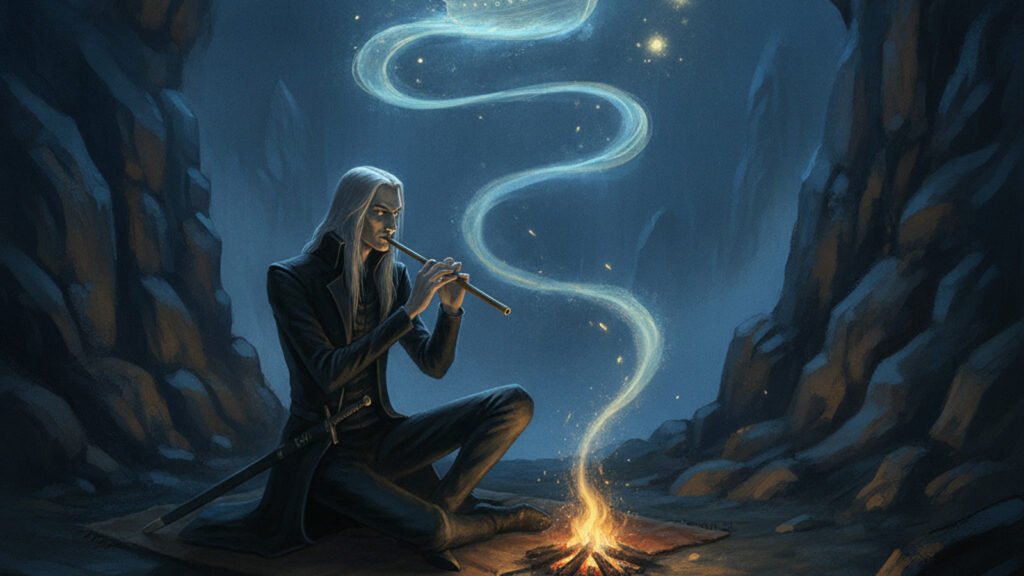
| The Way of Kings | The King’s Wit | Tells Kaladin the Wandersail story and gives him his flute (ch. 57) |
| Words of Radiance | Wit, and a stranger in Shallan’s past | Comforts young Shallan (ch. 45) and tells Kaladin the Fleet story (ch. 59) |
| Oathbringer | Wit in occupied Kholinar | Bonds the Cryptic Design in the epilogue |
| Rhythm of War | Wit, Jasnah’s partner | Tells Kaladin The Dog and the Dragon (ch. 80); Odium erases his memory |
| Wind and Truth | Wit | Hands the Dawnshard to Sigzil and is destroyed by Retribution (ch. 146) |
| Wax and Wayne books | Beggar and carriage driver | Throws Wax a coin that holds a memory of Kelsier |
| Tress of the Emerald Sea | Narrator, cursed cabin boy | Breaks the Sorceress’s curse and becomes an Elantrian (ch. 64) |
| Yumi and the Nightmare Painter | Narrator, frozen coat rack | Trapped in stasis on Komashi until the father machine falls |
What does Wit do in the Stormlight Archive?
Wit plays a far more visible role on Roshar than anywhere else, and Sanderson has explained why: on Roshar his goal was to become a Radiant. As the King’s Wit he insults highprinces for sport, but his real work is quieter. He tells Kaladin stories at the moments Kaladin is closest to breaking, the Wandersail in The Way of Kings, Fleet in Words of Radiance and The Dog and the Dragon in Rhythm of War, where he promises Kaladin that he will be warm again. He also finds a traumatised young Shallan at the Middlefest Fair and tells her to keep cutting a path for the light, advice she remembers for years.
“You needn’t fear me. I’m terribly ineffective at hurting people. I blame my upbringing.”
Hoid to Shallan, Words of Radiance, chapter 45
Wit’s Rosharan arc turns serious in the later books. In the epilogue of Oathbringer he walks into occupied Kholinar, finds Design, the Cryptic who was about to bond the dead King Elhokar, and bonds her himself, becoming a Lightweaver. By Rhythm of War he is in a relationship with Jasnah, and the two of them draft the contract for the contest of champions with Odium. In the epilogue, Taravangian, the new Vessel of Odium, destroys the Breaths where Hoid stores his short-term memory and fools him into believing Rayse still holds the Shard. Our Lightweavers guide covers Design and the order in depth.
What powers does Hoid have?
Hoid has quietly gathered more Invested Arts than anyone in the series, and Sanderson has called him likely the most powerful non-Shard being in the Cosmere. He brought Yolish Lightweaving from before the Shattering, a looser illusion art that needs no spren, and on Roshar he adds Rosharan Lightweaving and Soulcasting through Design. He burned a bead of lerasium stolen from the Well of Ascension, which made him a Mistborn with power equal to the ancient Allomancers. He holds at least two hundred Breaths from Nalthis, and he finally became an Elantrian in Tress of the Emerald Sea after winning his bet with the Sorceress.
Why can’t Hoid hurt anyone?
Hoid cannot physically harm anyone because he held a Dawnshard, one of the four primal commands used to kill Adonalsium, for a very long time. Coppermind explains that the Dawnshard, whose command is Exist, reshaped his spiritweb much the way savantism reshapes other people. The side effects are strict: Hoid cannot strike another person or even himself, and cannot eat meat he believes was naturally produced. The same change probably explains why he no longer ages and heals from almost anything, which is why even a Shardblade does not frighten him. Emotional harm is a different matter. Hoid will manipulate, insult and let people suffer through inaction, and he warns Dalinar never to trust him too much.
What is Hoid’s goal in the Cosmere?
Hoid’s stated goal is to stop Rayse, the original Vessel of Odium, and his letters to Frost, Harmony, Endowment and Autonomy show him trying to warn every Shard that Rayse would eventually escape Roshar. Most of them dismissed him, and only Harmony answered with real interest. Sanderson has also said that Hoid’s ultimate aim is to make that which once was, which many fans read as reuniting the Shards or restoring Adonalsium in some form. That reading remains a theory, since the books have not confirmed it. The Wind and Truth era adds an awkward twist: the man Hoid spent millennia hunting was replaced by Taravangian, and Retribution is now the bigger threat.
Where is Hoid after Wind and Truth?
Hoid is alive on Scadrial after Wind and Truth. Chapter 146 destroys his body on Roshar seconds after he passes the Dawnshard to Sigzil, but chapter 147 shows him regenerating from a cell culture that the kandra Ulaam kept for exactly that purpose. Coppermind notes that this places his Wax and Wayne appearances, the beggar at the wedding, the carriage driver and the man who throws Wax a coin holding a memory of Kelsier, after Wind and Truth and before Stormlight Book 6. Our Shard theories guide covers Retribution and the Shards he is watching.
Frequently asked questions
Is Wit the same person as Hoid?
Yes. Wit is the title Hoid holds on Roshar as the King’s Wit, the court jester of Elhokar Kholin and later Jasnah Kholin. Hoid is the name he uses most across the Cosmere, although he says in The Way of Kings that he stole it from someone he should have loved.
Is Hoid in every Cosmere book?
Hoid appears in almost every published Cosmere novel, often in a single scene and in disguise, from the bandaged beggar of Elantris to the narrator of Tress of the Emerald Sea and Yumi and the Nightmare Painter. His Roshar role as Wit is by far his largest on the page.
Why can’t Hoid hurt people?
Hoid held a Dawnshard, a command used to Shatter Adonalsium, for a very long time. According to Coppermind, the Dawnshard changed his spiritweb so that he cannot physically harm others or himself and cannot eat naturally produced meat. The same change is the likely source of his agelessness and healing.
Does Hoid die in Wind and Truth?
Hoid’s body on Roshar is destroyed by Retribution in chapter 146 of Wind and Truth, seconds after he passes his Dawnshard to his apprentice Sigzil. He is not gone for good: in chapter 147 he regenerates on Scadrial from a cell culture that the kandra Ulaam kept for exactly that purpose.
What is Hoid’s real name?
Hoid’s birth name is unknown. His recorded aliases include Hoid, Wit, Cephandrius Maxtori, Midius, Topaz and Dust, and Brandon Sanderson has said that Topaz was the name of his first Dungeons and Dragons character, which is where Hoid began.
The Way of Kings is the perfect entry point. Available in print, Kindle, and audiobook.
The Stormlight Archive audiobooks - narrated by Michael Kramer & Kate Reading - are 40–57 hours each. The best use of a commute in fantasy history.