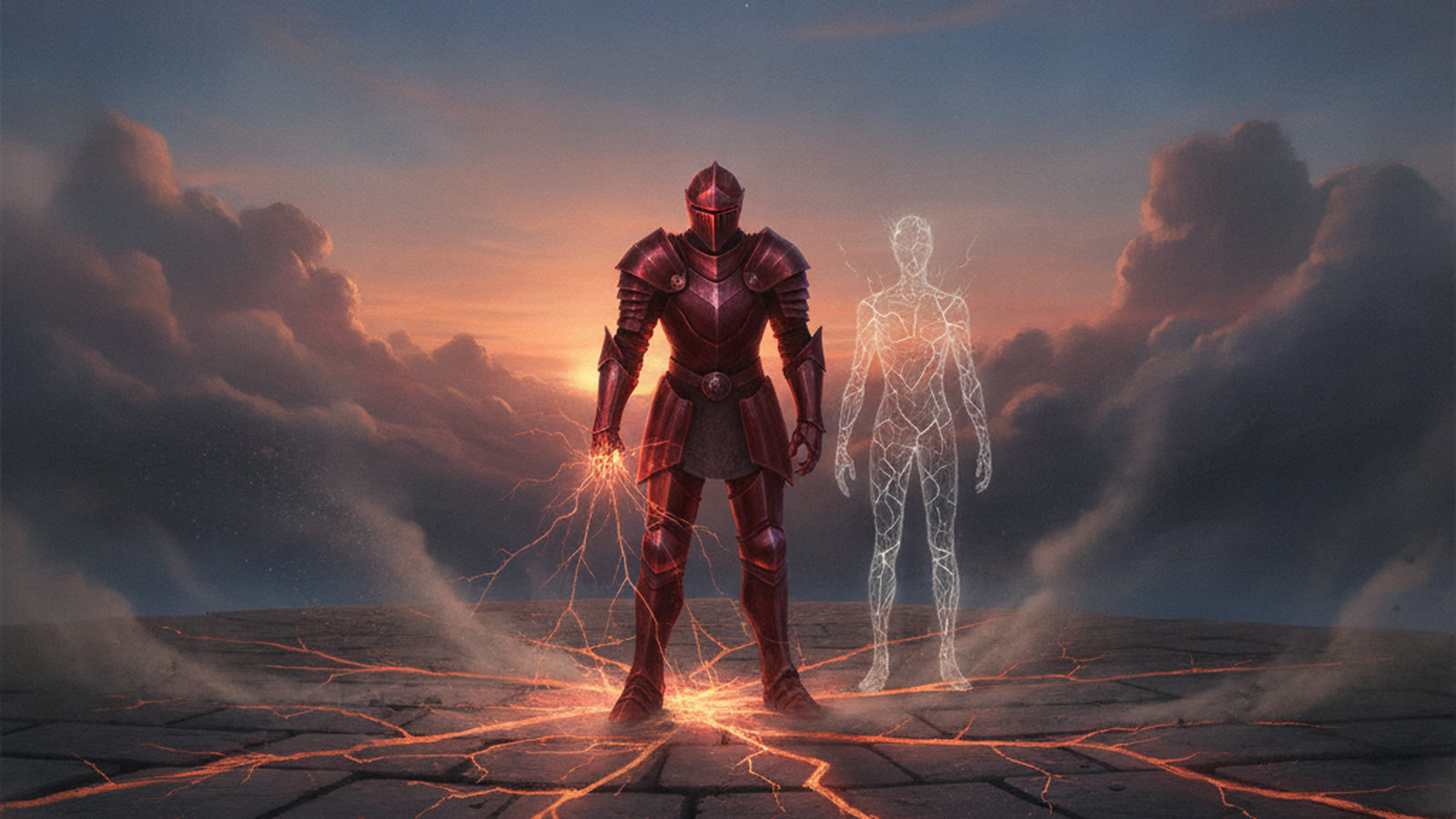
Allomancy is the better Metallic Art for a sudden fight, because an Allomancer burns metal to pull new power from Preservation. Feruchemy is the better art for endurance, healing and knowledge, because a Feruchemist stores attributes in metalminds and spends them later with almost no ceiling. One person holding both arts beats either. Spoilers for the Mistborn trilogy and The Alloy of Law follow.
What is the difference between Feruchemy and Allomancy?
Feruchemy and Allomancy are two of the three Metallic Arts of Scadrial, the world of Brandon Sanderson’s Mistborn books, and the difference between them is the source of the power. Coppermind classifies Allomancy as an end-positive art, which means the user gains power from an outside source, and Feruchemy as an end-neutral art, which means no Investiture is gained or permanently lost. An Allomancer swallows metal and burns it away. A Feruchemist keeps the metal, wears it against the skin, and uses it as a battery for attributes that came from the Feruchemist’s own body. The third art, Hemalurgy, steals powers with metal spikes and is end-negative. Our guide to the Mistborn magic systems explains all three arts one by one, while the sections below only compare the first two.
How does Allomancy get its power?
Allomancy gets its power from the Shard Preservation, and the metal an Allomancer swallows is only the key that opens the door. Coppermind describes each Allomantic metal as a focus whose molecular structure acts as a conduit to Preservation, so the metal decides which ability appears and is vaporized in the process. Allomancers usually drink vials of metal flakes suspended in alcohol, feel a reserve of power in the stomach, and can flare that reserve for a stronger and shorter effect. There are sixteen basic Allomantic metals arranged in pairs, with iron Pulling on nearby metal and steel Pushing on it. A Misting can burn one metal, and a Mistborn such as Vin can burn them all. Allomancy also has to be awakened through Snapping, which before the Catacendre usually required a traumatic experience.
How does Feruchemy get its power?
Feruchemy gets its power from the Feruchemist’s own body, which is why the Mistborn books call Feruchemy the power of balance. A Feruchemist converts an attribute into Investiture, stores it in a piece of metal touching the skin, and later taps the same attribute back out. Coppermind gives the standard example: a Feruchemist who stores half of their strength for one hour can later spend one hour at one hundred and fifty percent strength. The charged metal is called a metalmind, and the metal decides the attribute. Iron stores weight, gold stores health, brass stores warmth, and copper stores memories, which is how the Keeper Sazed carries the records of hundreds of religions in his bracers. Storing has a real cost, because a Feruchemist filling a goldmind spends that time sick and weak.
How do Feruchemy and Allomancy compare side by side?
The table below compares Allomancy and Feruchemy on the points that decide most arguments between Mistborn readers, using the mechanics recorded on Coppermind.
| Point of comparison | Allomancy | Feruchemy |
|---|---|---|
| Source of power | Preservation, an outside source (end-positive) | The user’s own attributes (end-neutral) |
| How the metal is used | Swallowed, burned and consumed | Worn against the skin as a metalmind and kept |
| Who can be born with it | People with noble ancestry, after Snapping | People with Terris ancestry |
| One power only | Misting | Ferring |
| Every power | Mistborn | Full Feruchemist |
| Main limit | The metal left in the stomach | The amount stored in advance |
| Shard alignment | Preservation | Balance of Preservation and Ruin |
Which Metallic Art is stronger in a fight?
Allomancy is the stronger Metallic Art in an unplanned fight, because an Allomancer needs nothing except a vial of metals and a few seconds. Burning pewter grants strength and toughness immediately, burning steel turns every coin into a projectile, and a Mistborn combines those powers with tin for sharper senses and atium for a glimpse of the next few seconds. The power arrives from Preservation, so the Allomancer pays no price in advance and can refill by drinking another vial. A Feruchemist caught with empty metalminds has nothing extra to spend. Coppermind’s opening quote on the Allomancy page calls the art brutal, raw and powerful, and the description fits. The noble houses of the Final Empire prized their Mistborn and Mistings for the same reason, since an Allomancer with a vial at hand is always ready.
Feruchemy is the stronger Metallic Art in a fight the Feruchemist had time to prepare for, because tapping has a ceiling that Allomancy lacks. Coppermind states that a Feruchemist can store attributes only at a reasonable rate, but that no theoretical upper limit applies to how much can be tapped at one moment. Allomantic pewter grants a fixed boost that flaring raises only so far, while a Feruchemist can drain weeks of stored strength in a single minute. The trade is efficiency, since tapping faster than the storage rate loses part of the attribute to compression. Sazed shows the pattern at the Battle of Luthadel in The Well of Ascension, where he uses Feruchemy to fight koloss at the Steel Gate, and Coppermind records that his gate was the last one to fall.
Which Metallic Art is more useful outside combat?
Feruchemy is the more useful Metallic Art outside combat, because the attributes a Feruchemist can store cover almost everything a long life needs. A goldmind holds health for a future injury, a coppermind holds memories with perfect recall, and other metalminds hold wakefulness, warmth and mental speed. Coppermind records that before the Lord Ruler many Feruchemists held ordinary jobs as herders and mountain guides, and that the Worldbringers and later the Keepers used the art to preserve knowledge across generations. Allomancy offers fewer everyday tools, although bronze detects other Allomancers and brass and zinc let Soothers and Rioters adjust emotions in a crowd. Feruchemy also works on the Feruchemist alone, which makes the art harder to abuse and harder to detect. Coppermind notes that sensing Feruchemy with bronze would require a technique nobody currently knows.
Who can become a Feruchemist or an Allomancer?
Feruchemy and Allomancy are both inherited through the soul, and Coppermind describes each as a spiritually hereditary trait that ignores ordinary dominant and recessive genetics. Feruchemy requires Terris ancestry. Allomancy requires noble ancestry, and a skaa with mixed blood generally needs a noble ancestor within the previous five generations. Allomancy must also be awakened by Snapping, while Feruchemy needs no trigger at all. Both arts can be stolen with Hemalurgic spikes, and a bead of the God Metal lerasium writes Allomancy directly into a person. The Feruchemist Rashek took a different route and used the power of the Well of Ascension to rebuild himself as a Mistborn. The Lord Ruler then spent a thousand years running a breeding program against the Terris people, and Coppermind gives his reason plainly: Rashek feared that Feruchemy and Allomancy would mix and produce a rival as powerful as himself.
What happens when one person has both Feruchemy and Allomancy?
A person with both Feruchemy and Allomancy in the same metal can use Compounding, the most powerful trick in the Metallic Arts. The Compounder stores an attribute in a metalmind and then burns the metalmind with Allomancy. Coppermind explains that the stored Investiture decides the form the magic takes, while Preservation supplies the fuel, so the Compounder receives the Feruchemical attribute multiplied. Sazed and Waxillium Ladrian both estimate the return at about ten times the amount stored, though Coppermind cautions that the exact figure is uncertain. The attribute can then be stored again and burned again, and repeated cycles give effectively unlimited reserves. Compounding is how the Lord Ruler stayed young for a thousand years with atium, and how he healed fast enough to start rumors that he had survived a beheading.
Compounding also shows why the question of the better Metallic Art has a third answer. Miles Dagouter in The Alloy of Law is a gold Compounder with effectively limitless healing, which earned him the name Miles Hundredlives. Coppermind lists the limits. The metalmind has to be small enough to swallow, the supply of metal runs out, and the bursts are intense enough to remove the safety that normally protects a Feruchemist from their own power. Twinborn whose two metals differ cannot Compound at all, but the combination still helps. Waxillium Ladrian is a Crasher, a Coinshot who also stores weight in iron, so he can become heavy before a Steelpush and light before a jump. Wayne is a Slider and a Bloodmaker who can heal inside a bubble of sped-up time.
How did Feruchemy and Allomancy change after the Catacendre?
Feruchemy and Allomancy both became weaker and more common after the Catacendre, the remaking of Scadrial at the end of The Hero of Ages. Coppermind records that the surviving Terris intermarried with the general population, and that the genes for Feruchemy broke apart as a result. Full Feruchemists disappeared and Ferrings, who hold a single Feruchemical power, took their place, just as Mistings far outnumber Mistborn. Harmony also changed Snapping, so Allomancy now develops around puberty without trauma. The dilution of both arts has a floor, and Coppermind states that the weakening had completely stopped by the third era of Scadrian history. Feruchemy gained one advantage in the same period, because the Southern Scadrians learned to build unsealed metalminds that anyone can tap, including the fabled Bands of Mourning.
So which Metallic Art is better, Feruchemy or Allomancy?
Allomancy is the better Metallic Art for raw power on demand, and Feruchemy is the better Metallic Art for control, flexibility and peak output. A reader choosing a single power for a dangerous night in Luthadel should choose Allomancy, because Preservation pays the bill and a vial of metals refills in seconds. A reader choosing a single power for a whole lifetime should choose Feruchemy, because stored health, memory and strength solve more problems than Pushing on coins. The books themselves give a clear ranking of the combinations. A Mistborn beats a Misting, a Full Feruchemist beats a Ferring, and a Compounder beats them all, which is exactly why the Lord Ruler worked so hard to remain the only one. Readers who want the Roshar comparison can continue with Allomancy vs Surgebinding.
Frequently asked questions
Is Feruchemy stronger than Allomancy?
Feruchemy is not simply stronger than Allomancy, because the two Metallic Arts win in different situations. Allomancy is end-positive and draws new power from Preservation, so an Allomancer can fight on short notice with a vial of metals. Feruchemy is end-neutral and only returns what the Feruchemist stored earlier, but Coppermind notes that tapping has no theoretical upper limit, so a prepared Feruchemist can briefly exceed anything Allomantic pewter offers.
What is the main difference between Feruchemy and Allomancy?
The main difference between Feruchemy and Allomancy is where the power comes from. An Allomancer swallows a metal and burns it to draw power from the Shard Preservation, and the metal is consumed. A Feruchemist stores a personal attribute such as strength, health or memory inside a piece of metal touching the skin, called a metalmind, and taps it back later. Allomancy adds power, while Feruchemy moves it through time.
Can someone be both a Feruchemist and an Allomancer?
A person can hold both Feruchemy and Allomancy, and on Scadrial that person is called a Twinborn. Twinborn began to appear after the Catacendre, when the Terris people and the descendants of the nobility intermarried. Waxillium Ladrian is a Crasher, a Coinshot who is also a Skimmer, and Wayne is a Slider who is also a Bloodmaker. The Lord Ruler was the only person in the Final Empire with every power of both arts.
What is Compounding in Mistborn?
Compounding in Mistborn is the technique of storing a Feruchemical attribute in a metalmind and then burning that metalmind with Allomancy. The result is a supercharged burst of the stored attribute, which Sazed and Waxillium Ladrian both estimate at about ten times the original amount. The Lord Ruler Compounded atium to stay young for a thousand years, and Miles Dagouter Compounded gold to heal from almost any wound.
Is Sazed an Allomancer or a Feruchemist?
Sazed is a Feruchemist, not an Allomancer, for the whole of the first Mistborn trilogy before his Ascension. Sazed is a Terrisman Keeper, and Coppermind describes his most important power as storing memories in copperminds, which gives him access to the records of more than five hundred religions. Sazed also stores strength, weight, health and wakefulness, and he taps those reserves to fight koloss at the Battle of Luthadel.
The Way of Kings is the perfect entry point. Available in print, Kindle, and audiobook.
The Stormlight Archive audiobooks - narrated by Michael Kramer & Kate Reading - are 40–57 hours each. The best use of a commute in fantasy history.