Words of Radiance hides nine details that most readers pass on a first read: a poem built from the five part titles, five sets of epigraphs that spoil later books, a countdown written by a Radiant, a spren nobody wanted, a prince who talks to his sword, and a Herald’s Blade that changes shape. Spoilers for all five Stormlight Archive novels follow.
1. What do the five part titles of Words of Radiance spell out?
The five part titles of Words of Radiance spell out a ketek, the symmetrical holy poem of the Vorin religion that reads the same forward and backward. The parts are named Alight, Winds’ Approach, Deadly, The Approach and Winds Alight, and Coppermind lists the combined line among its examples of the form. Coppermind also records that the part titles of every Stormlight Archive novel except Wind and Truth form a ketek, so the trick started in The Way of Kings and held for four books. The Words of Radiance poem doubles as a plot summary, because the winds approach for four parts, the deadliest stretch of the book sits in the middle, and the story ends with two storms meeting over the Shattered Plains. Readers who skip the title pages between parts skip the poem completely, which is why so few people notice it.
2. Who is writing the epigraphs in Part One, and what do they give away?
Navani Kholin is writing the epigraphs in Part One of Words of Radiance, and her journal entries give away the end of the book on the first page of chapter one. Coppermind dates the entries to the months of Jeseses and Jesesach of 1174, which places Navani at her desk after the Everstorm has already arrived. The first entry takes the blame for two months of death and destruction. Later entries mention a sign found on the walls, admit that nobody suspected spies among the parshman slaves, and describe a grief worse than the death of Gavilar, which Navani ties to losing Jasnah. A reader who pays attention therefore knows from chapter one that the Alethi will fail to stop a disaster, and knows from chapter six that a listener spy is hiding in the warcamps, long before Rlain reveals himself to Bridge Four.
3. What do the listener songs in Part Two predict?
The listener songs that head the chapters of Part Two predict the Everstorm, the return of the old gods and the contest of champions that drives the next three novels. Coppermind identifies the stanzas as oral history from the Songs of Listing, Secrets, Winds, Histories, Wars, Revision and Spren. One stanza about nightform, a form that foresees the future, says that a new storm will come to remake the world, and that stanza appears hundreds of pages before Eshonai’s stormforms summon the Everstorm. Another stanza describes the listener gods as splinters of a single soul that wants control and destroys every land it sees, which reads today as a plain description of Odium. The same stanza ends with a challenged champion, the idea that grows into the contest of champions fought in Wind and Truth.
4. Who wrote the letter in Part Four, and why does the letter matter?
Frost wrote the letter that runs through the epigraphs of Part Four, and the letter matters because Frost explains why nobody from outside Roshar is coming to help. Coppermind describes Frost as a dragon from Yolen who was present at the Shattering and who corresponds with Hoid, the man Roshar knows as Wit. The Second Letter is the reply to the letter Hoid wrote in the epigraphs of The Way of Kings. Frost refers to Rayse and Tanavast, the people who held the Shards Odium and Honor, and says that Rayse is trapped in the Rosharan system. Frost also jokes that Hoid has named his current identity after a virtue he only imagines he has, a jab at the name Wit. The letter ends with a refusal to help and a request that Hoid stop interfering.
5. What is hidden in the Diagram epigraphs of Part Five?
The Diagram epigraphs of Part Five hide two codes and a set of instructions that explain most of what Taravangian does for the rest of the series. Coppermind records that the string of digits heading chapter 84 decrypts to an order: “Hold the secret that broke the Knights Radiant.” The secret is the human origin revealed at the end of Oathbringer, and the Diagram wants it kept as a weapon against the new orders. The ten long numbers in chapter 88 are dates, and Coppermind identifies them as the final ten highstorms before the Everstorm. Other passages tell Taravangian to find new Radiants by watching for people who survive when they should not, to assassinate the Blackthorn if he seems likely to sue for peace, and to become king of everything.
6. Who is writing the countdown on the walls?
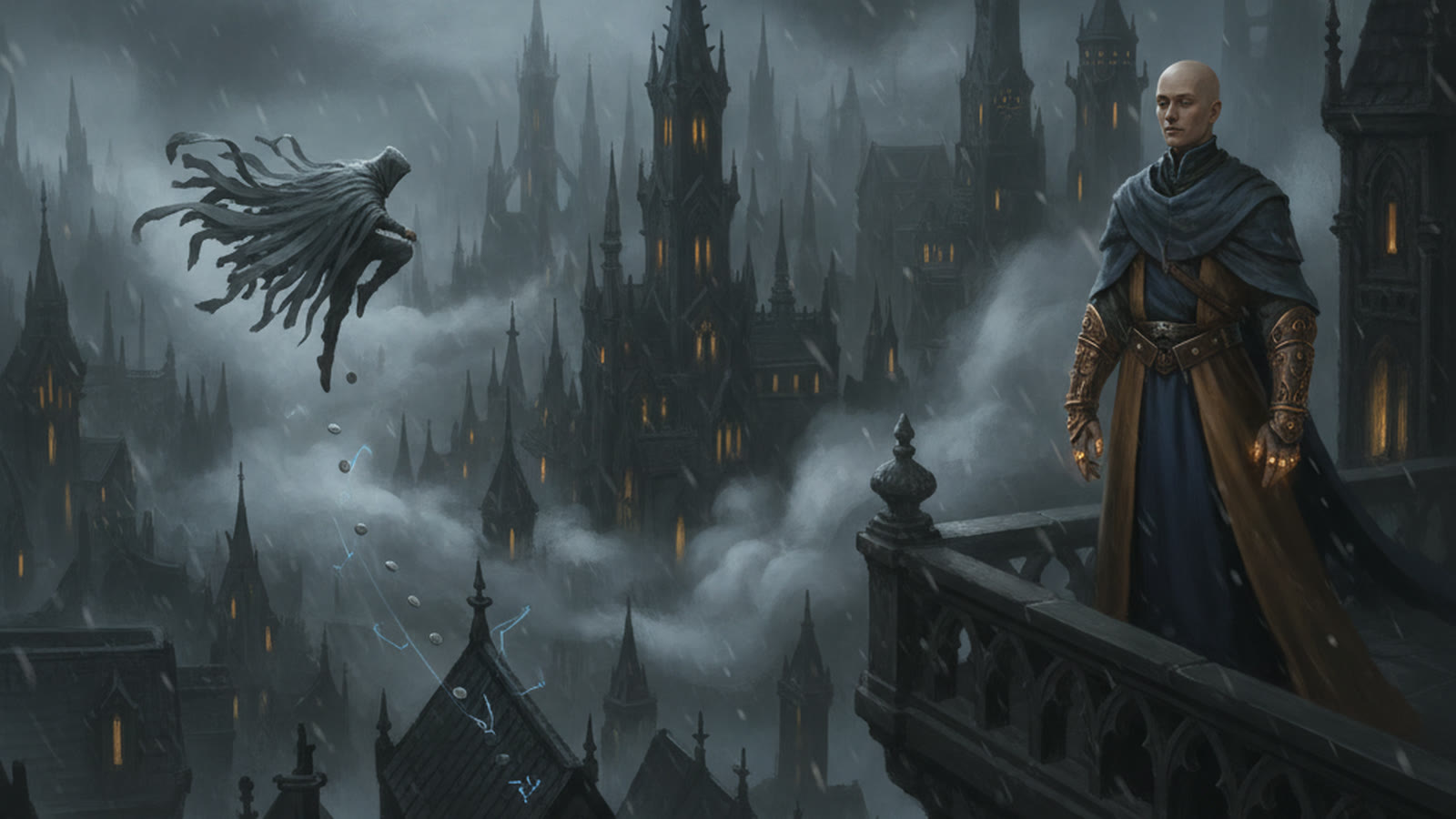
Renarin Kholin is writing the countdown on the walls, and Words of Radiance leaves two clues to his secret long before the Battle of Narak. Coppermind explains that Renarin sees visions of the future because his spren, Glys, was touched by the Unmade Sja-anat, and that the visions cause him to scratch glyphs and numbers counting down to the Everstorm. Navani’s journal in Part One calls the writing a sign and notes that the Vorin church ties any sight of the future to the Voidbringers, which explains why Renarin hides it. The second clue is his Shardblade. Coppermind notes that Renarin uses the Blade Adolin gave him only under great duress, because a bonded Radiant hears the screams of the dead spren inside an ordinary Shardblade whenever he holds one.
7. What is the small spren that keeps following Eshonai?
The small spren that keeps following Eshonai is Timbre, the spren who later turns Venli into a Radiant. Coppermind describes Timbre as a Reacher, also called a lightspren, who appears in the Physical Realm as a ball of light trailing a comet-like white streak. Timbre decided to seek a Nahel bond with a singer instead of a human, chose Eshonai first, and began trying shortly before the Everstorm arrived. Coppermind adds that the attempt made little headway because Eshonai was in stormform and found the spren annoying. Eshonai became a Surgebinder only moments before her death in the chasms. Timbre stayed with the body until a search party arrived, and then bonded Eshonai’s sister, which makes one unexplained spren in book two the seed of Venli’s whole story in Oathbringer and Rhythm of War.
8. Why does Adolin talk to his Shardblade before a duel?
Adolin talks to his Shardblade before a duel because talking to the Blade is one of his private traditions, and the habit turns out to be the start of the most unusual bond in the series. Coppermind lists the routine that Words of Radiance shows before each bout in the dueling arena: Adolin speaks to his unnamed Blade in the preparation room, has a glyphward painted, and eats chicken. Coppermind also records that Adolin never named the sword because inventing a name for a Blade that was not his felt pretentious. The Blade is Mayalaran, a deadeye cultivationspren who was bonded to an Edgedancer before the Recreance. Maya later testifies at Adolin’s trial in Rhythm of War, and by Wind and Truth she and Adolin can speak into each other’s minds.
9. Why does Taln’s Blade look different at the Shattered Plains?
Taln’s Blade looks different at the Shattered Plains because the weapon Dalinar receives is not the weapon that fell at the gates of Kholinar. Coppermind states that the Honorblade of the Herald Talenel was swapped for a regular Shardblade somewhere on the road. The Blade Taln carried into Kholinar in the epilogue of The Way of Kings was shaped like an enormous spike, long, narrow and straight. The Blade that reaches the warcamps in Words of Radiance is wide and cleaver-like, and Coppermind adds that it screams when a Radiant touches it, which marks it as a dead Shardblade. Dalinar bonds the cleaver without noticing the change. Taln’s real Honorblade was later recovered by the Shin, and Coppermind names Rit-daughter-Clutio as the Honorbearer who holds it in Wind and Truth.
Where does each hidden detail in Words of Radiance pay off?
The table below lists each of the nine hidden details in Words of Radiance, where to find it in the book, and where the Stormlight Archive finally pays it off.
| Hidden detail | Where to look in Words of Radiance | Where it pays off |
|---|---|---|
| Part titles form a ketek | The five part title pages | The two storms at the end of the same book |
| Navani’s journal | Part One epigraphs | Jasnah’s loss and the Everstorm, later in the book |
| Listener songs | Part Two epigraphs | The contest of champions in Wind and Truth |
| The Second Letter | Part Four epigraphs | Odium arriving in person in Oathbringer |
| The Diagram codes | Part Five epigraphs, chapters 84 and 88 | The secret of human origins in Oathbringer |
| The countdown | Glyphs on Dalinar’s walls | Renarin’s visions, revealed at Narak |
| The comet-like spren | Eshonai’s scenes in stormform | Venli’s bond with Timbre in Oathbringer |
| Adolin’s unnamed Blade | The dueling preparation room | Maya’s testimony in Rhythm of War |
| Taln’s swapped Blade | Taln’s arrival at the warcamps | The Shin Honorbearers in Wind and Truth |
Is Words of Radiance worth rereading for these details?
Words of Radiance is worth rereading for these details, because the nine clues above change how the whole book reads. A first read treats the epigraphs as decoration, the comet-like spren as scenery and Adolin’s chat with his sword as a charming quirk. A second read shows Navani confessing the ending in chapter one, a dragon naming Odium’s Vessel, Taravangian’s plan sitting in plain numbers, and three future Radiant bonds forming in the background. Readers who want the same treatment for book one can continue with nine things you missed in The Way of Kings. Readers who want the finale laid out step by step should read Words of Radiance ending explained, which covers the Battle of Narak, the Third Ideal and the Oathgate.
Frequently asked questions
What are the epigraphs in Words of Radiance?
The epigraphs in Words of Radiance change with each of the five parts of the novel. Coppermind lists them in order: Part One quotes the journal of Navani Kholin, Part Two quotes the listener songs, Part Three quotes the in-world book called Words of Radiance, Part Four is a letter addressed to Hoid, and Part Five quotes the Diagram written by King Taravangian.
Who wrote the Second Letter in Words of Radiance?
The Second Letter in Words of Radiance was written by Frost, a dragon from the world of Yolen who was present at the Shattering of Adonalsium. Coppermind records that Frost has been corresponding with Hoid through letters. The Second Letter answers the letter Hoid wrote in The Way of Kings, and Frost uses the reply to refuse to help against Odium and to ask Hoid to leave Roshar alone.
Who wrote the countdown on the walls in Words of Radiance?
Renarin Kholin wrote the countdown on the walls in Words of Radiance. Coppermind explains that Renarin sees visions of the future because his spren, Glys, was changed by the Unmade Sja-anat, and that the visions cause Renarin to write glyphs and numbers counting down to the arrival of the Everstorm. Shallan finds Renarin scratching the final message during the Battle of Narak.
Is the spren that follows Eshonai in Words of Radiance important?
The spren that follows Eshonai in Words of Radiance becomes very important, because the spren is Timbre. Coppermind identifies Timbre as a Reacher, also called a lightspren, who tried to begin a Nahel bond with Eshonai shortly before the Everstorm arrived. Eshonai was in stormform and found the spren annoying. After Eshonai died, Timbre bonded her sister Venli, who became a Willshaper.
Did Dalinar get a real Honorblade in Words of Radiance?
Dalinar did not get a real Honorblade in Words of Radiance. Coppermind states that the Honorblade of the Herald Talenel was swapped for a regular Shardblade at some point between Kholinar and the Shattered Plains. The Blade that reached Dalinar is wide and cleaver-like, while the Blade that fell at the gates of Kholinar was long, narrow and straight like a spike.
The Way of Kings is the perfect entry point. Available in print, Kindle, and audiobook.
The Stormlight Archive audiobooks - narrated by Michael Kramer & Kate Reading - are 40–57 hours each. The best use of a commute in fantasy history.