The Windrunners are the stronger order overall, because their squire Resonance turns one Radiant into a flying company, while the Skybreakers hold the one-on-one edge once Division unlocks at the Third Ideal. Both orders share Gravitation, so the matchup comes down to Adhesion against Division, and numbers against discipline. Spoilers for all five Stormlight Archive books follow.
What is the difference between Windrunners and Skybreakers?
The Windrunners and the Skybreakers are the two Knights Radiant orders built around flight, and the two orders sit side by side on the Double Eye of the Almighty because both use the Surge of Gravitation. Coppermind lists the Windrunners as honorspren bonders who use Adhesion and Gravitation, follow the Herald Jezrien and wear Shardplate made of windspren that glows a vibrant blue. The Skybreakers bond highspren, use Gravitation and Division, follow the Herald Nale and wear Shardplate made of luckspren that glows a smoky grey. The deeper split is philosophical. Windrunners swear to protect people, while Skybreakers swear to uphold a code of law, and that single difference shapes how each order recruits, trains, fights and, in the end, chooses a side in the True Desolation.
Which Surges do Windrunners and Skybreakers use?
Gravitation works almost identically for both orders, and Coppermind cites Brandon Sanderson saying the Surge largely looks the same whether a Windrunner or a Skybreaker is using it. Both orders use the Basic Lashing to change the direction gravity pulls a person or object, which is how both of them fly. The real difference comes from the second Surge. Adhesion gives Windrunners the Full Lashing, which glues objects to a surface with Stormlight, and combines with Gravitation into the Reverse Lashing, which turns an object into a small gravity well that pulls things toward it. Division gives Skybreakers the power to destroy or degrade matter, which is far more lethal in a fight, but most Skybreakers cannot touch Division at all until they have sworn the Third Ideal of their order.
How do Windrunners and Skybreakers compare side by side?
| Trait | Windrunners | Skybreakers |
|---|---|---|
| Herald | Jezrien, replaced by Kaladin after the Reforging of the Oathpact | Nale (Nalan’Elin) |
| Spren | Honorspren | Highspren |
| Surges | Adhesion and Gravitation | Gravitation and Division |
| Shardplate | Windspren, glows blue | Luckspren, glows smoky grey |
| Core oath | Protect those who cannot protect themselves | Seek and administer justice under a code |
| Squires | Many, from the Third Ideal, powered by Resonance | Few, only masters past the Fourth Ideal |
| Recreance | Abandoned their oaths, refounded by Kaladin | Never abandoned their oaths |
| True Desolation | Fought for Dalinar’s coalition | Most followed Nale to Odium; Szeth did not |
Who wins one-on-one, a Windrunner or a Skybreaker?
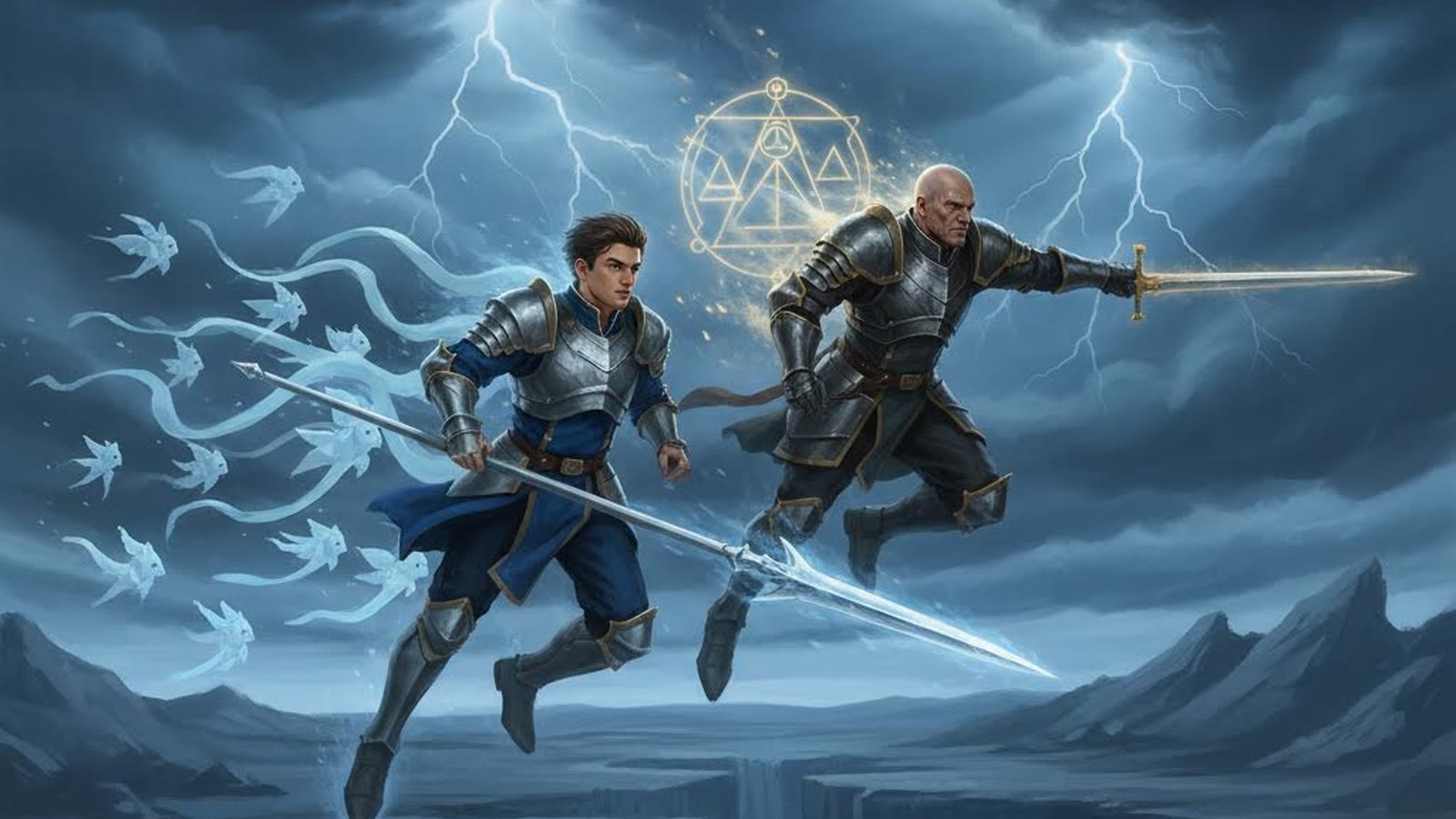
A Skybreaker probably wins a straight duel against a Windrunner of the same Ideal, and the reason is Division. Both fighters can Lash through the sky at similar speeds, both can summon a living Shardblade after the Third Ideal, and both gain living Shardplate at the Fourth. Division lets a Skybreaker burn or crumble whatever the Skybreaker touches, which offers a way to end a fight without landing a single sword stroke. A Windrunner answers with Adhesion tricks, such as sticking an opponent’s feet to a rock or dragging debris into a Reverse Lashing, plus the training Coppermind credits to the order as the best duelists and weapon masters among the Radiants. Our verdict is a slight Skybreaker edge in a duel, which is our reading of the books rather than anything Sanderson has stated.
Which order is stronger as an army?
As an army, the Windrunners are clearly stronger, and their Resonance is the reason. Coppermind describes the Windrunner Resonance as strength of squires: one Windrunner can support far more squires than a Radiant of any other order, and those squires are stronger than other orders’ squires too. A Windrunner squire can Lash and heal while the Windrunner is within about thirty miles, with fifty miles as the outer limit, and loses those powers an hour or two after the Windrunner leaves. The numbers show the result. About a year after the Battle of Thaylen Field, the refounded Windrunners counted roughly three hundred members, about fifty of them full Windrunners. Skybreakers can only take squires after completing the Fourth Ideal, which keeps the Skybreaker order small and slow to grow.
Why are Skybreaker Ideals harder to swear?
Skybreaker Ideals are harder to climb because the order gates its powers behind each oath, a practice Coppermind notes is rare among the Radiants. The Second Ideal, the Ideal of Justice, unlocks Stormlight and Gravitation. The Third Ideal, the Ideal of Dedication, requires bonding a highspren and swearing to follow a code or a person, and it is the minimum for both Division and a Shardblade. The Fourth Ideal, the Ideal of Crusade, demands a personal quest that the highspren must judge complete, and Skybreakers can wait decades at the Third Ideal before finishing one. The Fifth Ideal, the Ideal of Law, had been mastered by no one but Nale for centuries before Szeth swore it in Wind and Truth. Most Skybreakers never go past the Third Ideal at all.
“I will protect those who cannot protect themselves.”
The Second Ideal of the Windrunners, The Way of Kings
What do Windrunner Ideals ask instead?
Windrunner Ideals are personal rather than procedural, which is why the wording shifts from Radiant to Radiant. The Second Ideal is the promise to protect those who cannot protect themselves. The Third Ideal asks a Windrunner to protect even people the Windrunner hates, and Coppermind records three versions of it: Kaladin’s adds the condition that the protection must be right, Teft admits that the person he hates most is himself, and Lopen promises to protect people even from himself. The Fourth Ideal means accepting that some people cannot be saved, and it brings windspren Shardplate. Kaladin swore the Fifth Ideal in Wind and Truth, promising to protect himself so he can keep protecting others. Every Windrunner oath marks a breakthrough of character, not a test passed in front of a master.
Why do Windrunners and Skybreakers clash over the law?
Windrunners and Skybreakers have argued about the law since long before the Recreance. A Words of Radiance epigraph, drawn from an in-world history, describes sixteen Windrunners and their squires arriving to find Skybreakers dividing the innocent from the guilty, after which a great debate broke out. Coppermind summarizes the root of the conflict: highspren and their Skybreakers judge by the letter of the law and by what makes logical sense to them, while Windrunners will set the letter aside to do what they consider right. Ancient Skybreakers served as a kind of military police among the Radiants, worried that other orders would use their powers to become tyrants. Ancient Windrunners worked as scouts and special forces, so the two orders often met in the field with opposite instincts.
Which order kept its oaths, and which order betrayed them?
The Skybreakers are the only order that never abandoned its oaths at the Recreance, which sounds like a point in their favor until the True Desolation arrives. Under Nale, whom Coppermind describes as having lost his ability to feel emotions after the torture of Damnation, the order grew rigid and merciless, and Nale spent about two decades hunting would-be Radiants of other orders. When Nale returned to his fortress and declared that the law of the land belonged to the singers, he and most of the Skybreakers followed Odium. Szeth was one of the few who refused, swearing to follow Dalinar Kholin instead. The ancient Windrunners did abandon their Shardblades and Shardplate at the Recreance, yet the refounded order built around Kaladin and Bridge Four stayed loyal to the coalition.
So which order is stronger, Windrunners or Skybreakers?
The Windrunners are the stronger order when every factor is weighed, even though a top Skybreaker may win an even duel. The Windrunners field more Radiants, give their squires real powers and build oaths around character instead of paperwork, which let Kaladin’s order grow from one bridgeman to hundreds of Radiants in a few years. The Skybreakers bring the deadlier Surge and the stricter discipline, and Szeth’s Fifth Ideal in Wind and Truth showed what a Skybreaker at the top of the oaths can become. The Skybreaker order as a whole, though, followed the letter of the law straight into Odium’s service. Kaladin replacing Jezrien as the Herald of Kings and patron of the Windrunners after the Reforging of the Oathpact settles the symbolic question as well.
Frequently asked questions
Do Windrunners and Skybreakers share a Surge?
Windrunners and Skybreakers share the Surge of Gravitation, which is why both orders can fly by Lashing themselves toward the sky. Coppermind notes that Gravitation looks largely the same no matter which of the two orders uses it. The orders differ in their second Surge: Windrunners pair Gravitation with Adhesion, which powers the Full Lashing and the Reverse Lashing, while Skybreakers pair Gravitation with Division, the Surge that destroys or degrades matter.
Can Skybreakers use Division right away?
Skybreakers cannot use Division right away. Coppermind explains that the Second Ideal of the Skybreakers, the Ideal of Justice, unlocks Stormlight and Gravitation only, and that the Third Ideal, the Ideal of Dedication, is the minimum oath before a Skybreaker can use Division or summon a highspren as a Shardblade. Restricting Surges by oath is rare among the Radiant orders, which is one reason the Skybreakers feel so procedural compared with the Windrunners.
Is Szeth a Windrunner or a Skybreaker?
Szeth is a Skybreaker, although he spent The Way of Kings fighting with the Honorblade of Jezrien, the Herald of the Windrunners, which is why his early powers look like Kaladin’s. Nale recruited Szeth into the Skybreakers at the start of the True Desolation, and Szeth chose to follow the will of Dalinar Kholin as his Third Ideal. Coppermind records that Szeth swore the Fifth Ideal, the Ideal of Law, in Wind and Truth.
Why do Windrunners have so many squires?
Windrunners have so many squires because of their Resonance, which Coppermind calls strength of squires. Every Radiant order produces a Resonance from its two Surges, and the Windrunner version lets one Windrunner support far more squires than other orders, with stronger powers. Squires can Lash and heal near their Windrunner, within roughly thirty miles, and lose those powers an hour or two after the Windrunner leaves. Bridge Four grew into a full order that way.
Who are the Heralds of the Windrunners and Skybreakers?
The Herald of the Windrunners was Jezrien, the Herald of Kings, and the Herald of the Skybreakers is Nale, also called Nalan’Elin, the Herald of Justice. Coppermind records that Nale refused the Skybreakers at first and was the last Herald to accept an order. After the Reforging of the Oathpact in Wind and Truth, Kaladin Stormblessed replaced Jezrien as the Herald of Kings and the patron of the Windrunners.
The Way of Kings is the perfect entry point. Available in print, Kindle, and audiobook.
The Stormlight Archive audiobooks - narrated by Michael Kramer & Kate Reading - are 40–57 hours each. The best use of a commute in fantasy history.