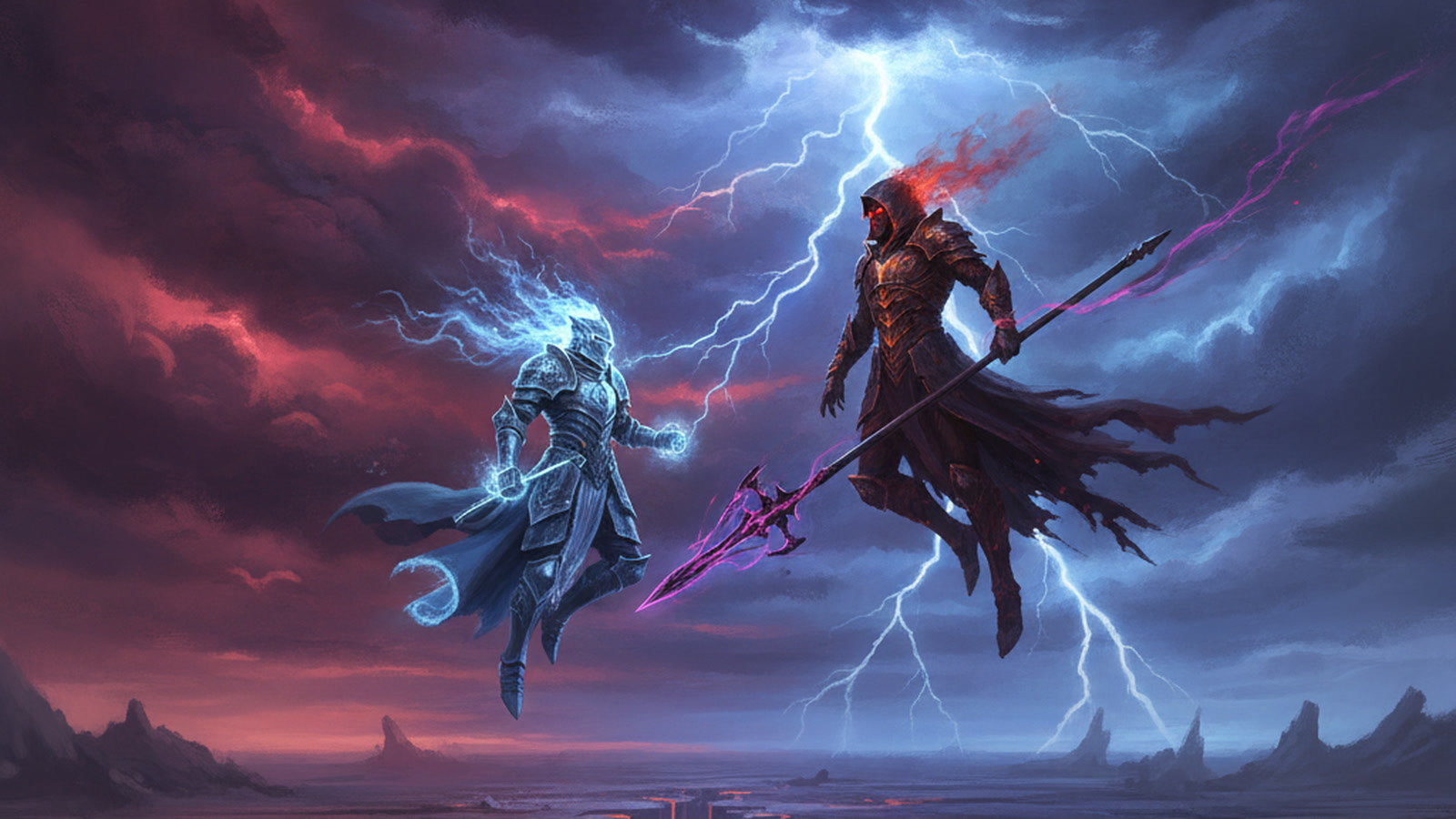
The Knights Radiant are stronger one on one, but the Fused have the edge in the long war. A Radiant commands two Surges, Shardblades and Plate, and grows with every Ideal. A Fused masters one Surge over thousands of years and simply comes back after dying. After Wind and Truth, that balance tips further toward the Fused.
What are the Fused and the Knights Radiant?
The Fused are the souls of ancient singers who return by possessing the bodies of living singers, and Coppermind describes them as Cognitive Shadows that rank above Regals and common singers in singer society. Odium offered the first Fused immortality after the opening skirmishes of the First Desolation, and they were later granted Surgebinding in answer to the creation of the Heralds. The Knights Radiant are humans, and in the modern era some singers, who bond a spren through a Nahel bond and swear Ideals to gain Surgebinding. Ishar organized the Radiants into ten Orders to help humanity fight and rebuild during the Desolations, and the Knights Radiant appeared as a counter to the Fused. The rivalry between the Fused and the Radiants is older than any kingdom on Roshar. Spoiler note: this comparison runs through Wind and Truth.
How do the Fused and the Knights Radiant compare side by side?
The core differences between the Fused and the Knights Radiant, based on Coppermind and the books through Wind and Truth:
| Fused | Knights Radiant | |
|---|---|---|
| Who they are | Souls of ancient singers reborn in living singer bodies | Humans (and now some singers) bonded to a spren |
| Groups | Nine brands | Ten Orders |
| Surges | One per brand, none uses Adhesion | Two per Order, each Surge shared by two Orders |
| Fuel | Voidlight (and Warlight), held indefinitely | Stormlight, which leaks away over time |
| Power ceiling | Less total Investiture than a Fourth Ideal Radiant | Grows with every Ideal sworn |
| Gear | Aluminum and raysium weapons | Shardblades and Shardplate at higher Ideals |
| Death | Reborn in a new body | Permanent |
| Experience | Thousands of years of practice | Most modern Radiants bonded within the last decade |
The table shows why the Fused vs Knights Radiant question has no clean answer: almost every Radiant strength mirrors a Fused weakness, and the reverse. The Knights Radiant win on breadth, since a Windrunner combines Gravitation and Adhesion into the Three Lashings while a Heavenly One has Gravitation alone. The Fused win on depth, persistence and numbers of veterans. According to Coppermind, roughly four thousand Fused existed by the Night of Sorrows in Wind and Truth, chapter 47, and no singer has been elevated to Fused since their original creation, as Rhythm of War, chapter 51, establishes. The Radiant side, by contrast, restarted in 1174 with just four members, Kaladin, Shallan, Dalinar and Renarin, and most of today’s knights have held their bond for only a few years.
Why does a Fused only use one Surge?
“We of the Fused know our Surge with an intimacy a Radiant will never know.”
Raboniel to Venli, Rhythm of War, chapter 31
Each of the nine Fused brands is tied to a single Surge, a Fused cannot switch brands, and no brand touches Adhesion, which Oathbringer and Rhythm of War both establish. Raboniel frames that limit as an advantage: one ability handled expertly instead of two handled clumsily. Coppermind explains the payoff. Most Fused brands can channel their Surge through their own bodies for passive effects that cost no Voidlight and last indefinitely, then spend Voidlight for bigger, Radiant-style feats. A Heavenly One can hold a single Lashing on herself without spending anything, which is why the Shanay-im seem to hover constantly. A Deepest One phases through stone using Cohesion, and an Altered One like Raboniel can Soulcast poisons out of her own body. A Radiant must burn Stormlight for nearly every use of a Surge.
Which side has more raw power?
The Knights Radiant have more raw power once they climb the Ideals. Raboniel admits in Rhythm of War, chapter 31, that the Fused can hold Voidlight indefinitely but have access to less total Investiture than a Fourth Ideal Knight Radiant, and Coppermind backs that up with a Word of Brandon. Each Ideal a Radiant swears also makes healing and Surgebinding more efficient and lets the body hold more Stormlight. Higher Ideals unlock the living Shardblade and Shardplate that no Fused can summon. Healing is the starkest gap: a Radiant with Stormlight shrugs off wounds that would kill anyone else, while Coppermind notes that the Fused heal inefficiently with Voidlight and are careful to avoid injury because their supply is limited. In a straight exchange of blows, a high-Ideal Radiant should outlast a Fused of similar skill.
The Fused answer that raw power with technology and tactics rather than with more Investiture. The Heavenly Ones fight with long lances coated in aluminum, the metal that blocks Shardblades, and inset with raysium, which drains Stormlight out of a Radiant. In Rhythm of War, chapter 5, Leshwi carries a raysium spear with a gemstone at its base that pulls Stormlight from any knight it strikes. The occupation of Urithiru shows the Fused strategy at its most effective: Raboniel corrupted the Sibling, the tower’s protections turned against the Radiants, and most of the knights inside fell unconscious. Kaladin fought on with only part of his powers. Brute strength never decided that battle. A Fused who understood her Surge, and her enemy, did.
Why is rebirth the biggest Fused advantage?
Rebirth is the biggest Fused advantage because a dead Knight Radiant stays dead, while a dead Fused simply waits for a new body. In Oathbringer, chapter 43, Moash kills Leshwi in midair with a knife, and she later returns and tells him she is the Fused he killed. The Oathpact was built to stop exactly that cycle: Honor and the Heralds bound the souls of the Fused to Braize, so the Fused had to torture a Herald into breaking before each Desolation, which the Fused call a Return. In the True Desolation the Everstorm makes rebirth faster than ever, because a Fused who dies can return in the next storm if a willing singer is available. Immortality has a price, though. Coppermind notes that each rebirth injures the mind, and many Fused, like Lezian the Pursuer, have slipped into obsession or madness.
Permanent death for a Fused does exist, but it requires unusual weapons that the Radiants have only recently found. In Rhythm of War, chapter 97, a raysium dagger linked to a gemstone of anti-Voidlight destroys a Fused soul, the discovery Navani made while working beside Raboniel, and a smaller dose can leave a Fused reborn mad. Word of Brandon confirms that Nightblood can also kill a Fused for good, and a Fused can be trapped inside a gemstone rather than slain. A Shardblade through the gemheart kills a Fused body instantly, as Oathbringer, chapter 79, shows, but that is ordinary death. Until anti-Voidlight weapons exist in numbers, every Radiant victory over a Fused is temporary, and every Fused victory over a Radiant is final.
Who wins when a Windrunner fights a Heavenly One?
A Windrunner and a Heavenly One fight to a standstill in the books, and the Kaladin and Leshwi rivalry is the proof. Leshwi is a high-ranking Shanay-im, and in Rhythm of War, chapter 53, she says it is rare to find a human who can fight in the skies well enough to challenge her. The Heavenly Ones kept an honorable tradition of one-on-one duels with Windrunners, which the Windrunners accepted because it cancelled out the Fused advantage in numbers. During the evacuation of Hearthstone, in chapters 5 and 6, Leshwi stabbed Sigzil but spared him, then accepted a draw with Kaladin after both were wounded. In Urithiru she refused to finish Kaladin when she realized he could not reach all of his Surges, because an unfair fight held no honor for her.
The duels show that individual Radiant and Fused skill is closely matched at the top, which is why the war turns on everything around the duelists. Kaladin has two Surges and a growing bond with Syl, while Leshwi has thousands of years of aerial combat and one Surge she knows perfectly. Neither of them ever lands a decisive blow. Leshwi’s story also shows that the line between the two sides can break. When Venli, her Voice, reveals in chapter 109 that she has bonded a Radiant spren, Leshwi is overjoyed that the spren have forgiven the singers. Leshwi then turns on Lezian’s troops to protect unarmed humans, and she ends Rhythm of War leaving Odium’s army through the Oathgate to Narak.
What changes for the Fused and the Radiants after Wind and Truth?
After Wind and Truth, the Knights Radiant lose the resource their power depends on. According to Coppermind, citing chapter 147, Stormlight became inaccessible on Roshar after Taravangian became Retribution and the Night of Sorrows began, an eternal night that covers every land except Azir and Urithiru. The Radiants can now Surgebind only inside Urithiru, where the Sibling’s Towerlight still flows, the same tower the ancient Orders used as their center. The Fused draw on Voidlight and Warlight, which Coppermind says they can reach through the Song of Prayer, so their fuel does not depend on the highstorms at all. Taravangian also raised the Fused El above the Nine. On paper, that gives the Fused the strategic edge going into the ten-year gap before book six.
The back five books will decide whether that Fused edge holds, and nothing beyond the published text is confirmed. Readers should treat any prediction as fan speculation. What the series has already shown is that the war between the Fused and the Radiants rarely turns on power alone. Rlain and Venli prove that singers can become Radiants, Leshwi proves that Fused can defect, and anti-Voidlight proves that immortality can end. The Bondsmith bond with the Sibling has already reversed one Fused victory, when Navani restored the tower’s defenses and knocked every Fused inside unconscious. A Radiant order confined to Urithiru now depends on that same tower to survive, which is why the Fused vs Knights Radiant balance is far from settled.
So who has the edge, the Fused or the Knights Radiant?
The Knights Radiant have the edge in a single battle, and the Fused have the edge in the war. A Radiant who has sworn the Third or Fourth Ideal brings two Surges, a Shardblade, often Shardplate, faster healing and more total Investiture than any Fused. The Fused bring mastery, patience, aluminum and raysium gear, a fuel supply that the Night of Sorrows did not cut off, and the ability to return from death. Across every Desolation before the Recreance, the Radiants and Heralds won each round only by sealing the Fused away through the Oathpact, never by defeating them for good. Our verdict: Fused 6, Radiants 4 after Wind and Truth, with anti-Voidlight as the wild card that could flip the score.
Frequently asked questions
Are the Fused stronger than the Knights Radiant?
Not one on one in raw power. Each Fused brand controls a single Surge and holds less total Investiture than a Fourth Ideal Radiant, according to Rhythm of War and Coppermind. The Fused make up for it with millennia of practice, passive use of their Surge and the ability to be reborn.
How many brands of Fused are there?
There are nine brands of Fused, one for each Surge except Adhesion: Heavenly Ones (Gravitation), Devastating Ones (Division), Flowing Ones (Abrasion), Magnified Ones (Progression), Masked Ones (Illumination), Altered Ones (Transformation), Husked Ones (Transportation), Deepest Ones (Cohesion) and Focused Ones (Tension).
Can a Fused be killed permanently?
Yes, but only by unusual means. Rhythm of War shows a raysium dagger linked to a gem of anti-Voidlight destroying a Fused for good, Word of Brandon confirms Nightblood can do it, and a Fused can also be trapped in a gemstone. Ordinary death only sends a Fused back to wait for a new body.
Who wins between Kaladin and Leshwi?
Nobody, so far. Kaladin and Leshwi duel several times in Rhythm of War and none of the fights ends with a clear winner. At Hearthstone they accept a draw, and in Urithiru Leshwi refuses to finish Kaladin while his powers are suppressed.
Can the Knights Radiant still use Stormlight after Wind and Truth?
Only in Urithiru. According to Coppermind, after Taravangian became Retribution and the Night of Sorrows began, Stormlight became inaccessible on Roshar, and the Radiants can Surgebind only inside the tower, using the Sibling’s Towerlight.
The Way of Kings is the perfect entry point. Available in print, Kindle, and audiobook.
The Stormlight Archive audiobooks - narrated by Michael Kramer & Kate Reading - are 40–57 hours each. The best use of a commute in fantasy history.