Of the ten orders of the Knights Radiant, the Windrunners are the ones most readers meet first, and the ones most readers want to be. They fly. They heal. They pull broken people out of the worst moments of their lives and refuse to let go. Kaladin Stormblessed made them the emotional spine of the Stormlight Archive, but the order is bigger, older and stranger than one man with a spear.
This guide covers what the Windrunners actually do, the Surges behind the flying, the Ideals they swear, why they collect squires when other orders do not, and who is standing in their ranks by the end of book five.
Who Are the Windrunners?
The Windrunners are the order of the Knights Radiant devoted to protection. Their patron Herald is Jezrien, called the King, and their divine attributes are Protecting and Leading. That pairing matters more than it looks. A Windrunner is not simply a bodyguard with a Shardblade, the order is built around people who put themselves between danger and someone weaker, then convince others to stand there with them.
Historically they were the most numerous order, and they held the line at the front of Roshar’s Desolations. In the modern era, they are the first order to properly return, which is why the reformed Knights Radiant at Urithiru have a distinctly Windrunner flavour in their early days.
The Spren: Honorspren
Windrunners bond honorspren, sapient spren from the Cognitive Realm who value oaths, honesty and duty roughly the way most people value oxygen. Honorspren live in Shadesmar, mostly in the fortress city of Lasting Integrity, and for centuries after the Recreance they refused to bond humans at all. Their argument was simple and hard to answer: humans broke the last bond, and the spren who trusted them died for it.
Sylphrena, Kaladin’s spren, is an outlier in almost every way, which is a large part of why the bond happens at all before the rest of her people are ready to consider it.
Windrunner Powers: Adhesion and Gravitation
Every Radiant order gets two of the ten Surges, and the Windrunners share one with the order on either side of them on the Double Eye chart. Theirs are Adhesion and Gravitation.
Basic Lashing (Gravitation)
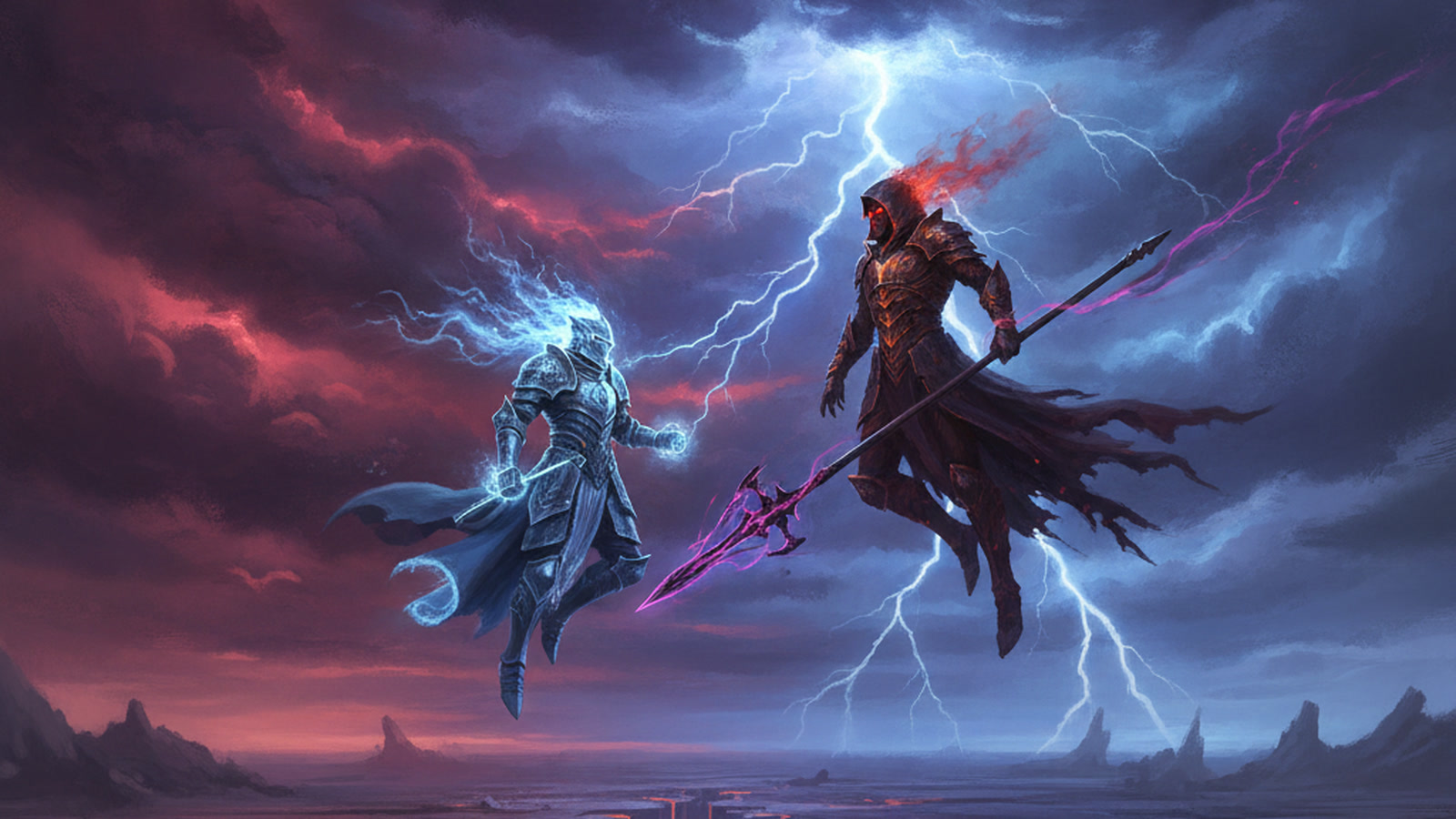
The Windrunner infuses a person or object with Stormlight and changes the direction that gravity pulls them. Do it once and you fall sideways. Do it three times toward the sky and you fall upward, fast. This is the flight everyone remembers, and it is why Windrunners fight in three dimensions while everyone else is stuck arguing over ground.
Full Lashing (Adhesion)
Stormlight is used to glue two things together, hard. A Full Lashing sticks a soldier to a wall, a door to its frame, or an enemy’s boots to the rock. It is less cinematic than flying and considerably more useful in a siege.
Reverse Lashing (Adhesion)
The subtlest of the three. An object is infused so that other things are drawn toward it, which in practice means a Windrunner can turn a shield into a magnet for arrows meant for someone else.
On top of the Surges, Windrunners get the standard Radiant package: rapid healing while holding Stormlight, enhanced strength and endurance, a Shardblade in the form of their spren after the Third Ideal, and Shardplate later on.
The Windrunner Ideals
Radiants grow in power by speaking Ideals, and they only work if the Radiant means them. Saying the words while lying to yourself does nothing. Every order shares the First Ideal, then diverges.
The First Ideal (all orders): “Life before death. Strength before weakness. Journey before destination.”
The Second Ideal: “I will protect those who cannot protect themselves.” Straightforward, and the reason so many Windrunners come from the bottom of Alethi society rather than the top.
The Third Ideal: “I will protect even those I hate, so long as it is right.” This is the one that hurts. It forces a Windrunner to defend an enemy, and it is the point where the spren becomes a Shardblade.
The Fourth Ideal: the hardest of them all, because it is not about doing more. It is about accepting that some people cannot be saved, no matter how fast you fly. An order built on protection has to eventually admit that protection has limits.
The Fifth Ideal takes us deep into Wind and Truth territory, so we will leave that one for readers who have finished book five rather than spoil it in a lore guide.
Squires: The Windrunner Advantage
Squires are proto Radiants attached to a full Knight, and while the concept is not exclusive to the Windrunners, no other order gathers them the way this one does. A Windrunner squire can draw in Stormlight, heal, and use limited Lashings while close to their Knight.
Bridge Four is the textbook case. A crew of condemned bridgemen ended up sharing Kaladin’s abilities long before most of them had a spren of their own, and several later formed bonds and became full Windrunners themselves.
Notable Windrunners
- Kaladin Stormblessed, bonded to Syl. The first Windrunner of the modern era and the reason the order exists again at all.
- Teft, bonded to Phendorana. Older, harder, carrying an addiction and a lifetime of self loathing, and one of the most quietly devastating arcs in the series.
- Lopen, bonded to Rua. The Herdazian one armed bridgeman who talks his way into a bond, then keeps talking. Comic relief that turns out to have real steel under it.
- Sigzil, the Azish scholar of Bridge Four, who steps up into a leadership role among the Windrunners as Kaladin moves away from front line duty.
- Skar, Drehy, Leyten, Peet and much of the rest of Bridge Four, who progress from squires to Knights across books three and four.
- Lyn, the former scout who joins the order and becomes part of its expanded ranks at Urithiru.
Windrunners vs Skybreakers
The comparison comes up constantly because both orders fly. They share Gravitation, and there the similarity ends. Skybreakers pair Gravitation with Division, bond highspren, and swear themselves to a chosen law or code rather than to protecting people. A Skybreaker asks what the law demands. A Windrunner asks who is about to get hurt.
That difference is the engine behind the Kaladin and Szeth material across five books, and it is why two people with nearly identical powers keep ending up on opposite sides of a fight.
Why the Windrunners Matter
Structurally, the Windrunners are Sanderson’s argument that the most powerful thing in a war is not the biggest weapon but the person who refuses to let the people behind them die. The order’s powers all point the same direction: Adhesion holds things together, Gravitation gets you to whoever needs you, and the Ideals escalate from protecting the weak, to protecting the people you hate, to forgiving yourself for the ones you lose.
FAQ
What Surges do Windrunners have?
Windrunners have Adhesion and Gravitation. Gravitation lets them change the direction gravity pulls a person or object, which is how they fly, and Adhesion lets them stick objects together or make an object attract other things toward it.
What spren do Windrunners bond?
Windrunners bond honorspren, sapient spren from Shadesmar who prize oaths and duty. Honorspren refused to bond humans for centuries after the Recreance, which is why the return of the Windrunners in the modern era is so significant.
What are the Windrunner Ideals?
All Radiants share the First Ideal about life before death, strength before weakness, journey before destination. The Second Ideal is a promise to protect those who cannot protect themselves, the Third extends that protection even to those the Radiant hates when it is right, and the Fourth requires accepting that some people cannot be saved.
What is a Windrunner squire?
A squire is a proto Radiant attached to a full Knight who can draw in Stormlight, heal and use limited Lashings while staying close to that Knight. Windrunners attract far more squires than other orders, which is how most of Bridge Four gained powers before forming their own spren bonds.
Are Windrunners stronger than Skybreakers?
Neither order is straightforwardly stronger. Both fly using Gravitation, but Skybreakers pair it with Division for destructive power while Windrunners pair it with Adhesion for control and protection. The practical difference in a fight tends to come down to the individual Radiant and how many Ideals they have sworn.
The Way of Kings is the perfect entry point. Available in print, Kindle, and audiobook.
The Stormlight Archive audiobooks - narrated by Michael Kramer & Kate Reading - are 40–57 hours each. The best use of a commute in fantasy history.