Rhythm of War does not end once. It ends three times, and the third ending quietly cancels the first two. The tower is freed, Kaladin finally speaks the Fourth Ideal, and Dalinar signs a contract that seems to box Odium in for good. Then, in the last pages, the god who signed that contract is killed by a man in a prison cell, and the contract passes to someone who reads fine print for a living.
Here is what actually happens at the end of the fourth Stormlight book, why each piece matters, and how it loads the gun that Wind and Truth fires. Full spoilers for Rhythm of War and light references to book five.
1. The tower comes back, and the scientist who took it asks to die
Urithiru falls early in the book. Raboniel, a Fused scholar of the Ones of Alteration, corrupts the crystal pillar at the tower’s heart with Voidlight, inverting its defenses so that every Radiant inside collapses into a coma except Kaladin. Navani surrenders the tower and spends the rest of the occupation working as Raboniel’s reluctant research partner.
Their partnership is the strangest love story Sanderson has written, and it is not romantic. Together they combine Stormlight and Voidlight for the first time, name the resulting tone the Rhythm of War, and discover anti-Voidlight and anti-Stormlight: Light that cancels Light. Navani assumes Raboniel wants a weapon to kill Odium. The real goal is worse. Raboniel wants a way to kill spren permanently, and her first use of the discovery is to end the life of her own daughter, Essu, whose mind was destroyed by thousands of years of rebirth.
The ending turns on that research. Navani lures Raboniel into a painrial trap, stabs her with a dagger of anti-Voidlight, and reaches the unguarded pillar. Humming the tone that pushes corruption out, she and the Sibling sing the Rhythm of the Tower together, and the Sibling finally agrees to bond her. Navani becomes a Bondsmith, the defenses flip back on, and every Fused and Regal in the tower drops. When she finds Raboniel still alive, the Fused asks to be finished, because most of her soul has burned away and she would return insane. Navani does it holding her hand, and leaves a note on the body calling her a hero.
2. Teft dies, and Kaladin speaks the Fourth Ideal
While Kaladin breaks the Pursuer in the atrium, Moash, now Vyre, ambushes Lift and Teft in the infirmary. He cuts through Lift’s legs with Jezrien’s Honorblade, uses a raysium dagger to permanently kill Teft’s honorspren Phendorana, and kills Teft. It is the most personal death in the series so far, because the book had just spent real pages on Teft’s recovery from his firemoss addiction, sitting in taverns drinking orange wine and nagging Kaladin into group therapy.
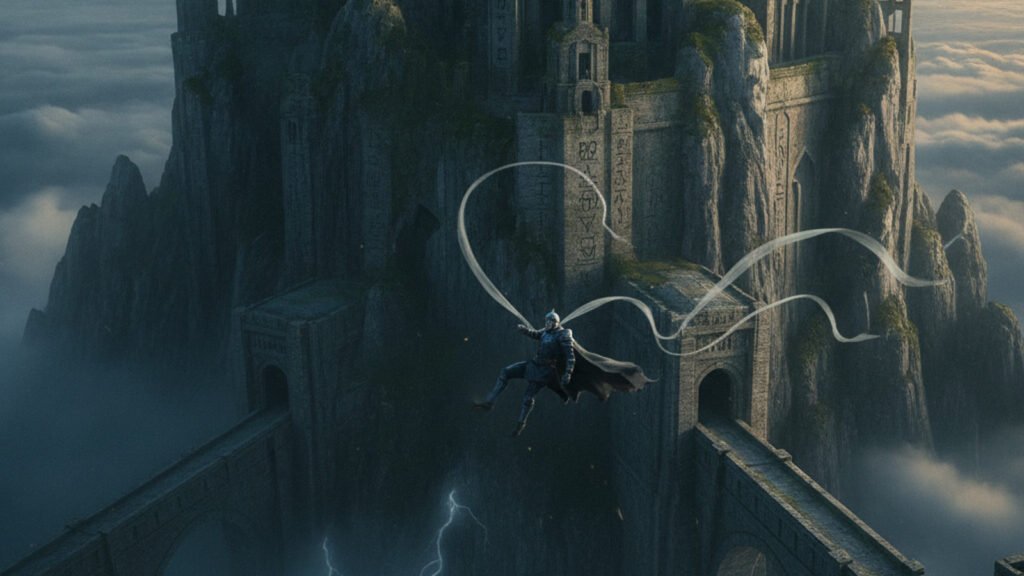
Kaladin finds the body and shuts down. A Fused carries his father Lirin to the top of the tower and drops him, and Kaladin follows, and at the top he makes the choice he refused at Honor’s Chasm: he jumps. Dalinar, riding the highstorm, demands that the Stormfather give Kaladin more time, then uses his Bondsmith Connection to pull him into a vision of Tien. His brother helps him accept what Kaladin has refused to accept for four books: that every person eventually dies, and that no protector can change that.
Falling, Kaladin speaks the Fourth Ideal: I accept that there will be those I cannot protect. Dalinar accepts the words, not the Stormfather, and windspren form around him as Shardplate. He catches Lirin. The payoff is not a power upgrade. It is the Windrunner oath finally admitting the limit of the Windrunner, and it only works because Kaladin spent the whole book as a surgeon and a therapy group organiser rather than a soldier.
3. Lasting Integrity: the trial, Maya, and who Restares really is
Far away in Shadesmar, Adolin surrenders himself to the honorspren of Lasting Integrity and asks to be tried for the Recreance on behalf of humanity. The trial goes badly until Maya, his deadeye Shardblade, speaks. Her testimony breaks the case: the spren killed in the Recreance were willing partners to the end of the Knights Radiant. They chose it. Adolin has no Ideals and no Surges, and he is still the one who wakes a dead spren up.
Shallan, meanwhile, came to Lasting Integrity with a second mission. Mraize sent her to find Restares, the shadowy leader of the Sons of Honor, and the High Judge of the honorspren turns out to be him: Kalak, one of the Heralds. Shallan plans to kill him, then does not, after her Veil and Radiant alters convince her she is strong enough to be Shallan. She reintegrates Veil, recovers the memory of killing her first Cryptic, Testament, and walks away from Formless, the faceless version of herself that would have given Mraize everything he wanted.
4. The contract: a contest of champions, ten days out
Back on the physical side, Dalinar negotiates the terms of the contest of champions that Odium once promised Honor in principle but never pinned down, the same restraint that kept him from facing Dalinar directly after Oathbringer. Wit drafts the first version, which Odium rejects outright. Odium’s counter offer would let him leave Roshar, which Wit had warned Dalinar never to allow. The final terms are a duel to the death between two willing champions, at the top of Urithiru, on the tenth day of the month Palah.
If Dalinar’s champion wins, Odium returns Alethkar and Herdaz and ceases hostilities. If Odium’s champion wins, he keeps everything he has taken and gets Dalinar’s soul. Either way, Odium stays bound to the Rosharan system. Dalinar leaves the meeting believing he has boxed in a god who cannot afford to break his word. That belief lasts about fifty pages.
5. Taravangian kills Rayse and becomes Odium
Taravangian spends the late book in a comfortable prison after betraying the coalition in Emul, his mind declining toward his slow, compassionate days. Then he realises two things. If Szeth saw Odium manifest, Szeth would strike with Nightblood. And the future of anyone near Renarin is hidden from Odium’s sight.
So he asks Dalinar for an Oathstone, knowing Szeth will come to kill him, and gets two gems with corrupted windspren from Sja-anat to make sure Odium arrives at the same moment. It works. Rayse pulls Taravangian’s mind into a vision, Taravangian takes hold of Nightblood’s manifestation and strikes, and Szeth kills Taravangian’s body in the physical world. Before Taravangian passes into the Beyond, Nightblood consumes Rayse. Taravangian, on his least intelligent day, with his emotions running wild, has an Intent close enough to the Shard’s to Ascend. In the epilogue Wit goes to challenge Rayse and realises a new Vessel has taken the power, and he is terrified, because Rayse was controlled by the Shard and a new Vessel might control it instead.
6. Why the ending is really a setup for Wind and Truth
Here is the trick of the final chapters. The contest was supposed to hold because both parties were bound by its spirit as well as its words. Rayse was. Taravangian is not. He inherits the contract and none of the scruples, and Coppermind lists the loopholes he goes on to exploit: under Alethi law, capturing a capital counts as capturing the country; rulers can surrender their lands to him willingly; and the champion has to be willing but can be manipulated.
That is why Wind and Truth opens as a ten day countdown rather than a war. Every victory at the end of Rhythm of War is real: the tower, the Fourth Ideal, the trial, the bonds. And every one of them now sits inside a legal document held by the smartest villain in the series.
Frequently asked questions
How does Rhythm of War end?
Urithiru is freed when Navani bonds the Sibling and becomes a Bondsmith, which switches the tower’s defenses back on and knocks every Fused and Regal inside unconscious. Kaladin swears the Fourth Ideal while saving his father, Dalinar and Odium agree the terms of a contest of champions, and in the final chapters Taravangian kills Rayse with Nightblood and becomes the new Vessel of Odium.
Who kills Teft in Rhythm of War?
Moash, going by Vyre. He ambushes Lift and Teft in the infirmary, cuts Lift down with Jezrien’s Honorblade, uses a raysium dagger to permanently kill Teft’s honorspren Phendorana, and then kills Teft. Kaladin finds the body minutes after defeating the Pursuer, and that loss is what sends him to the top of the tower.
What is Kaladin’s Fourth Ideal?
I accept that there will be those I cannot protect. Kaladin speaks it while falling from the top of Urithiru after a vision of his brother Tien, and it is Dalinar, not the Stormfather, who accepts the words. The windspren around him form his Shardplate at the same moment.
How does Taravangian become Odium?
He engineers it from a prison cell. He asks Dalinar for an Oathstone so that Szeth will come to kill him, and uses gems with corrupted windspren from Sja-anat so that Odium arrives at the same moment. When Rayse pulls his mind into a vision, Taravangian takes hold of Nightblood’s manifestation and strikes. Nightblood consumes Rayse, and Taravangian, on his least intelligent day, Ascends to the Shard.
What are the terms of the contest of champions?
A duel to the death between two willing champions, at the top of Urithiru, on the tenth day of the month Palah. If Dalinar’s champion wins, Odium must return Alethkar and Herdaz and cease hostilities. If Odium’s champion wins, he keeps everything he has taken and gets Dalinar’s soul. Either way Odium stays bound to the Rosharan system.
The Way of Kings is the perfect entry point. Available in print, Kindle, and audiobook.
The Stormlight Archive audiobooks - narrated by Michael Kramer & Kate Reading - are 40–57 hours each. The best use of a commute in fantasy history.